Gardens

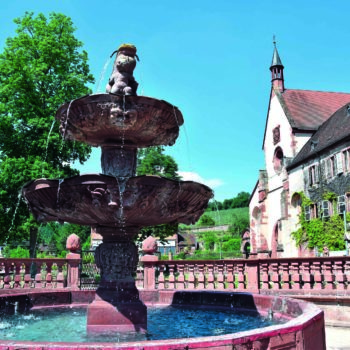
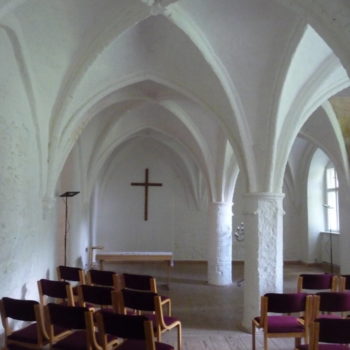
The abbey garden in Beuron. Photo: Bro. F. Weckenmann

Monastery gardens – more than an oasis for slowing down for tired visitors

In the tradition of the old monastic orders, the monastery garden is one of the most important facilities which as a whole make up a monastery: the church, the cloister, the monastic cells, the library, the chapter house, the guest house, the infirmary and just that garden. Its function is manifold: in addition to ensuring self-reliance and self-sufficiency, it also serves the holistic concept of monastic life. In the garden, a monk encounters the original place of longing, paradise, and through nature enters into a dialogue with the Creator. There he can also be creative in his work with the soil, plants and trees. This is how at an early stage the symbolic cloister and meditation gardens came into being. Worship in the spirit that takes place in the church, is thus complemented by working on God’s creation.

Monastery gardens have gained a new meaning, especially in our time, in the search for our position within an increasingly technical civilisation. It is still a place of longing. The diversity of monastery gardens is fascinating, regardless of whether they are historically shaped (Baroque gardens) or are currently used as show gardens or kitchen gardens (especially herb cultivation). Traditional knowledge about medicinal plants and the effects of aromas and essences is palpable in many monastery gardens. At the same time, more and more monasteries have to be closed for reasons of overageing. It is therefore all the more important to preserve the culture of monastery gardens, to document it and to make it usable in a contemporary perspective – also beyond the monastic locations, in terms of viable answers to questions of sustainability and mindfulness in dealing with our world.
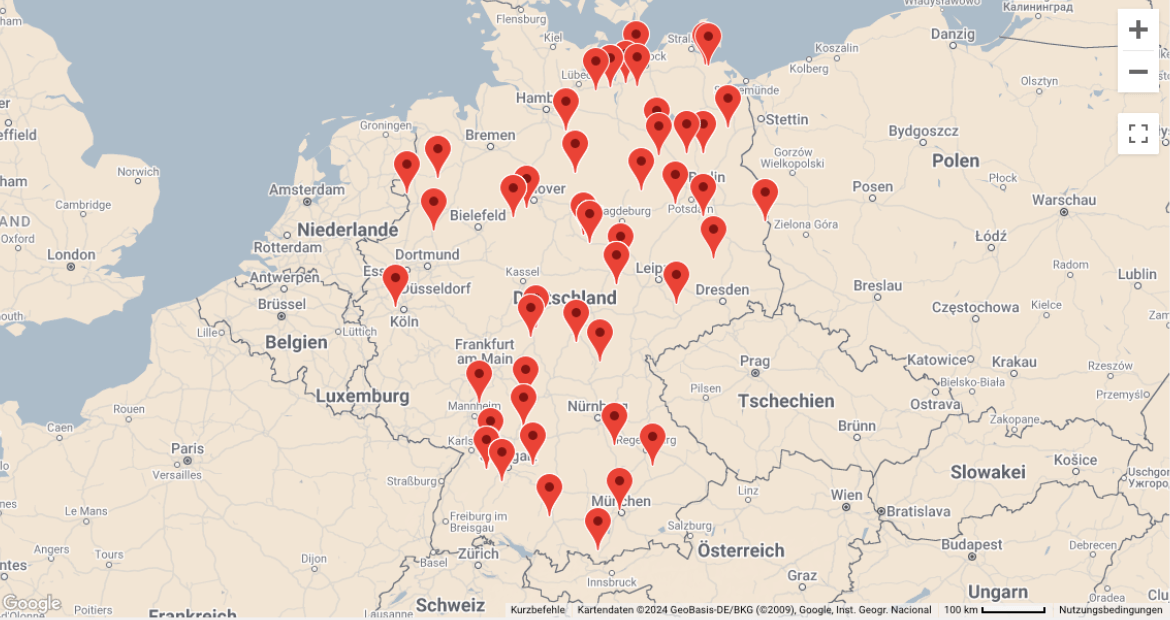
The Atlas of Monastery Gardens

The typology of monastery gardens

The cloister garden

The cloister garden is located between the monastery church and the cloister buildings. Often there are four small paths running towards the centre of the garden, which form a cross when viewed from above. A tree or fountain is usually placed in the centre. Cloister gardens are usually simple and a large part consists of lawn.

The herb garden

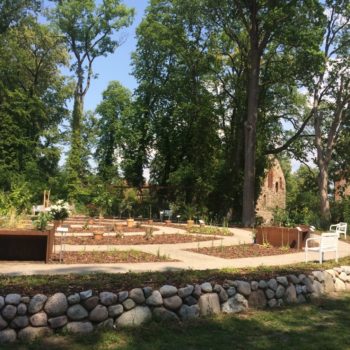
Raised beds held by wooden planks are the typical feature of an early medieval herb garden. The cultivated plants are used as medicines to alleviate health complaints. The herb garden, also known as a medicinal herb garden, can therefore often be found near the physician’s house and the infirmary. Today, it is surprising that roses and lilies are cultivated in the raised beds alongside well-known medicinal herbs such as sage and fennel. However, according to the early medieval understanding of medicine, plants with an aesthetic as well as a religious and cultic value can have a positive effect on a person’s recovery.

The fruit tree garden

Documents from the early Middle Ages testify the creation of monastic fruit tree gardens, which served as kitchen gardens but were also valued as places of recreation. The orchards are often also cemeteries, with a cross in the centre and symmetrically arranged graves and trees. The dual use of the garden is no coincidence, but symbolic: fruit trees are seen as symbols of resurrection. (Fruit) tree gardens also often surround the walls of monasteries. The Cistercians in particular promoted horticulture in their immediate surroundings.

The flower garden

The oldest documents that record and exemplify the cultivation of flower or ornamental gardens date back to the 13th century. Gardens full of blooms are intended to appeal to as many senses as possible and, being such pleasure gardens, are places of recreation. The garden area usually combines ornamental plants, lawns, hedges and small trees. The most important symbolic plants of monastic ornamental and flower gardens include hollyhocks, peonies and Christmas roses, white lilies, irises, columbines, evergreen, violets, lavender and roses.

The baroque garden

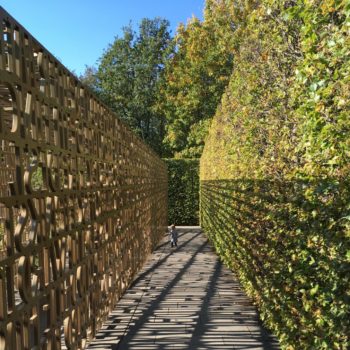
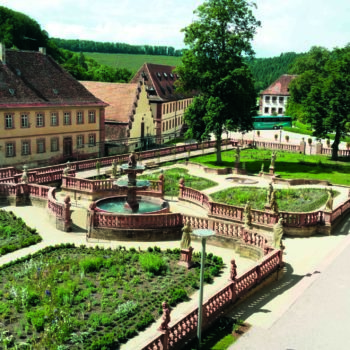
The baroque garden is a generously laid out, representative garden found at the palaces, castles and monasteries of the 17th and 18th centuries. Hedges and trees trimmed into geometric shapes, symmetrically arranged flowerbeds and lawns, avenues of trees and sculptures give these gardens a stately and magnificent character. The entire garden can be overlooked from an elevated position along the central visual axis. It is not unusual for a (small) section of the garden to be planted with vegetable and herb beds. In contrast to the other monastery gardens, the baroque garden was already accessible to outsiders at the time.

The vegetable garden

By cultivating vegetable or kitchen gardens, monks in the early Middle Ages ensured their food supply. At the same time, by gardening they were fulfilling the monastic commandment to live from the labour of their hands. Labouring in the soil was the counterpart to the monks’ otherwise intellectual and spiritual activities. Today, self-sufficiency is hardly necessary, but working in the garden remains a contemplative and essential part of monastic culture.

The meditation garden

There is no fixed canon of plants or forms for the layout of meditation gardens. The existing gardens therefore differ greatly from one another and are sometimes combined with other garden types. For all their diversity, meditation gardens have one thing in common: they are places of peace, reflection and contemplation. In prayer or silence, by reading and meditating, visitors and members of religious orders deepen their connection to God in the meditation garden.

The Carthusian garden

Carthusian monks attach particular importance to gardening. Physical exertion has a balancing effect and promotes relaxation and peace of mind. Contemplation and an inner attitude of simplicity can grow out of it. Each monk has his own garden in his cell, which he tends and organises on his own. Because the monks follow a vegetarian diet, there are also kitchen gardens on the monastery grounds where fruit, vegetables, aromatic and medicinal herbs are grown.

The landscape garden

Naturalness instead of symmetry – the landscape garden replaced the baroque garden at the beginning of the 19th century. Following the fashion of English landscape gardens, its natural appearance is essential for the landscape garden. Unshaped lakes, natural rivers, meadows, hills and trees transform the landscape into a picturesque work of art. Secluded monasteries with extensive surroundings are particularly suitable for creating a landscape garden. The term landscape park is also commonly used. However, this term can be confused with more modern gardens or protected areas.

Entdecken Sie die weiteren Säulen der Klosterkultur…

Beitrag

9877Gardens

Economy

Since their foundation, monasteries are more or less self-reliant economic enterprises. Already the…

Beitrag

9881Gardens

Spirituality

Monastic life finds its motivation in the search for God, in the religious…

Beitrag

9883Gardens

Education

Since monastic life is a conscious and organised one, it cannot be conceived…