A breach of law paves the way
When Robert, the first abbot of Molesme Abbey, left his monastery with a group of supporters to found a novum monasterium in the solitude of a wetland area on the Saône River, south of Dijon, he committed a clear breach of law. According to the Regula Sancti Benedicti, he was not allowed to leave his monastery or his office. The accusation of heretical behaviour accompanied the new beginning, and Robert was indeed forced to return to his monastery in Molesme, where he died in 1111.
Robert was an ardent representative of a group of monks who wanted to return to a more original interpretation of the Rule of St. Benedict. In 1098, he fled Molesme, which had accumulated some wealth, in order to venture a reformatory new beginning, which was nothing less than a return to the desired observance of the old rule. In his eyes, the wealth of the monastic institution was a dangerous aberration and a departure from the original rule associated with the name of Benedict of Nursia. The question of reform was therefore a question of interpretation of the rule. Robert and his followers wanted to return to the pura regula. The propagandistically formulated sanctity of the text did not free Robert’s successors from the question of what the pure rule actually meant. This question is explicitly raised in the only surviving Cistercian commentary on the Rule from 1210 from the monastery of Pontigny.[1]
Against the accusation by Ivo of Chartres († 1115) and others that the new group lived in their own private and therefore secret places according to their own law (in privatis locis proprio jure), that they were fugitivi,[2] the innovators insisted – with reference to the Decretum Gratiani Causa 19 quaestio 2 capitulum 2[3] – on the primacy of the individual’s decision (lex privata) over general principles (lex publica), since ultimately it was a matter of the individual’s salvation. Against the suspicion of heresy that had been expressed, the Cistercians were able to successfully argue that they wanted to live according to the Benedictine Rule, which had been recognised for centuries, and not according to their own, self-created law. However, having to breach the Rule to that end meant that – unconsciously, of course – the starting signal had been given for the creation of what was to become the so far largest religious order with completely new administrative structures. A new type of monastery emerged, which sought to escape the world, in an ambivalent way, because it was still connected to the world in a previously unknown way and thus sent out corresponding impulses.
How could this implied new influence of monasteries be paraphrased? Gert Melville attempts to provide an answer to this question.[4] Based on institutionally anchored power, which in the monastery was exercised consensually between the abbot and the convent, this power was founded on the fundamental desire for agreement within the individual monastery or within a monastery association based on the consensus of all participating monasteries. Consensus as a factor of power was the prerequisite for conveying prestige, competence and reputation to the outside world, for example through monastic piety practised in the convent or even through individual holiness. The conviction of the lay world, which in the best case was thus achieved, evoked an influence on the outside world that must be distinguished from the internal influence. The inquisitorial power internally, over members of the convent, is contrasted with an external one: the monasteries being perceived as the light of the world.
Creative potential
According to Melville, this potency can be understood as the power to act and shape. It forms the creative potential of a monastery or order.[5] This is based on two assumptions of innovation:
- Monasteries and orders have founded their extraordinary stability through achievements with high innovative potential, which have both an internal and external impact.
- The influence of monasteries/orders is characterised by a spectrum of social interactions with the secular and ecclesiastical environments. This has a passive component to cushion external influences on the convent and thus adapt them to the internal ways of life if necessary: the prestige once gained by a monastery, for example, can be more long-lasting than short-term external influences or upheavals. The influence also has an active component when the forces generated within transform the environment beyond the monastery walls, whether through active action or through instruction (pastoral care, preaching).
Hence, monasteries act as alternative models with the help of their institutional orders, their communication skills and, finally, their communal concepts, which can be transformed into attractive propositions to the outside world.
Literacy and institutionalisation
The basis of the Cistercians’ success was mainly founded in their consistent use of writing. In the absence of a charismatic founder, the new group had to agree on a universally accepted normative basis, which was initially done on the basis of the Carta caritatis. This regulated the relationship between Cîteaux and its daughter monasteries, regular visitations and compulsory attendance at the general chapter.[6]
The Cistercians formed a transpersonal religious order – and what was new – with previously unknown institutional forms: with a general chapter, a fixed provincial structure and regular visitations. This led – and once again this was innovative – to an objectified leadership of the order. The order had its own legislation, its ius proprium, which was laid down in the order’s statutes. Legislation was in the hands of the general chapter. The latter was a representative and consensus-based decision-making body of the order. The abbots who met there – under the leadership of an abbot general – were able to make countless internal regulations through gradually evolving formal legal proceedings. The instrument of visitation created a way of monitoring the monastery’s own law on site, i.e. in the individual monasteries. However, this constant effort to achieve uniform order (uniformitas) was at odds with the actual diversity of secular circumstances, their diversitas.
The changes emanating from the innovative monastic structures were to continue into the European secular forms of government and governance procedures accepted to this day, that is to say in the self-evident distinction between office (abbot general) and person, and between control (visitation) and decision-making bodies (general chapter). In doing so, the Cistercians also succeeded in developing the first formal control procedure for legal issues, thereby achieving a level of sustainability in decision-making and enforcement that was unique
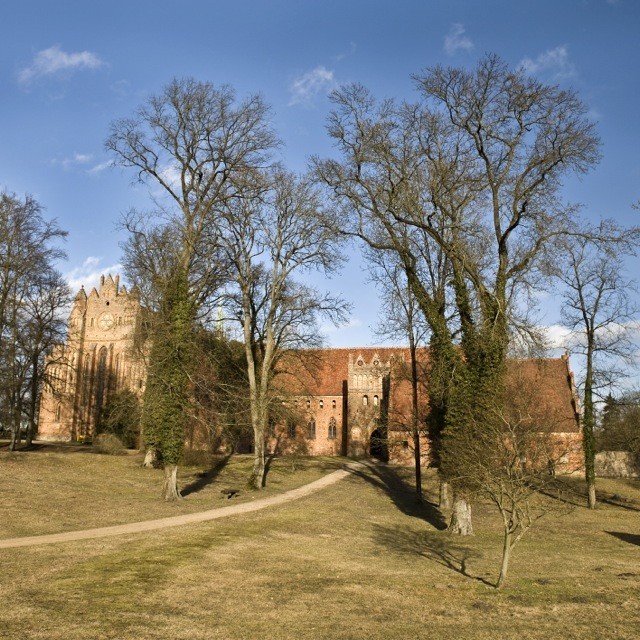
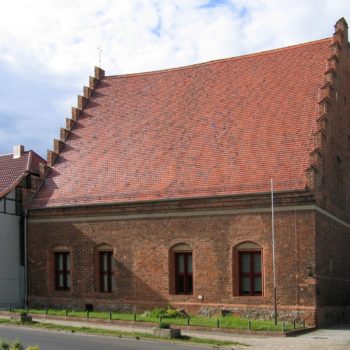
The Cistercian monastery of Chorin in Brandenburg
in the 12th and 13th centuries. The written manifestation of these formal procedures within the order has been preserved to the present day in the statutes and their commentaries in serial sources. Formal procedures, for example in disputes over property or external encroachments on the rights of individual monasteries, always meant a challenge to reduce the complexity of isolated events to a few cardinal points in order to be able to decide them formally and effectively. This initially created an inquisitorial investigation of the isolated event in the visitation protocols, the results of which – based on witness interviews – were presented to the general chapter. There, a decision was sought in the form of definitions (definitiones), ideally within the order itself, but sometimes by appealing to popes, kings and other monarchs. This procedural routine played a significant role in maintaining the stability of the Cistercian Order.[7] At the same time, it signalled to the world that any attack on a single Cistercian monastery could provoke a response from the entire Order.
Agriculture and infrastructure
Apart from these new institutional forms, the Cistercians – like the Premonstratensians of the same period – were associated with new, innovative economic forms. However, there were considerable differences in implementation among the individual monasteries as soon as one abandoned the normative level of economic guidelines. The independent cultivation of the lands by lay brothers[8] meant, at least in the early stages, the introduction of new forms of cultivation, which were initially only to be found among the Premonstratensians. Through increased consolidation of land ownership, the individual monastery – in its respective unique location – strove to build up a contiguous monastery estate. At the same time, a new infrastructure with supply cells was established: roads as a connection to sales markets in the cities, mills as machines for mechanising and accelerating work processes, dams to protect agricultural land from flooding, and stores in cities for direct marketing (Stadthöfe). A Cistercian monastery was in close contact with the world; returning to the original rule and thus living a humble monastic life did not preclude innovative and positive action in the world.
The focus was on large agricultural units such as granges (among the Premonstratensians: curiae), which allowed for more efficient cultivation and thus higher yields that opened up new forms of sales such as the aforementioned Stadthöfe (city stores). There, directly at the consumer’s doorstep, goods could now be sold by excluding intermediate trade. However, this also meant that both orders responded to the wave of city founding in the 12th and 13th centuries. Monasteries, despite their search for seclusion from the world, are therefore always connected to the world. The construction strategies of monasteries favoured proximity to water, not only to have fresh water, but also to make effective use of the machines of the Middle Ages, the mills. Cultivation, distribution and sales thus showed signs of proto-industrial structures. This system of management only worked as long as the monastery’s own workers, the aforementioned lay brothers, took care of the agriculture. Despite all the normative statements, it was not the Cistercian monks themselves who did the work: in many cases, they had others do it for them.
Power and excess

The Cistercian monastery of Marienwalde in what is now Bierzwnik, Poland
Individual Cistercians and Premonstratensians acted as economic managers, running the large-scale farms – the granges – sometimes with such success that their superiors pulled the emergency brake and, concerned for their salvation, assigned them to other tasks. Caesarius of Heisterbach’s (1180 to 1240) Dialogus Miraculorum tells of an abbot from Steinfeld who had a very capable lay brother as the manager of the monastery’s own farmyard.[9] The latter steadily increased the monastery’s estates and managed the lands impeccably, always striving to achieve the highest possible yields and profits. This behaviour, which is entirely reasonable to us today, led to a completely different assessment in the narrative of the early 13th century: despite the protests of his fellow brothers, the abbot dismissed this, in our eyes, capable farm manager from his position, accusing him of avarice and excess. The farm manager was not a monk, but one of the monastery’s lay brothers, i.e. he lived outside the convent in another part of the monastery – still visible today in Chorin, for example – together with others, and also being subject to certain religious norms, but he remained in an intermediate position between laity and monkhood, which allowed him to work outside in the world for the monastery or convent. The provost justified his action by saying he was protecting the lay brother’s soul, for which he was partly responsible. When the Archbishop of Cologne wanted to “borrow” the same lay brother from Steinfeld, who was probably a particularly outstanding administrator and economist, in order to reform some of the archbishop’s run-down farmyards, the provost refused him as a logical consequence.[10] For him, at least, the ‘capitalist economic mindset’ had its limits when it came to preserving the salvation of souls – but interestingly, this was no longer the case for all his contemporaries! A new way of thinking in the economic sector was spreading throughout Europe, with Cistercians and Premonstratensians playing an active role!
The aforementioned excerpt from the Dialogus, as well as the Cistercian general chapter statutes and authors such as Stephen of Tournai (1128–1203) and Giraldus Cambrensis (c. 1146–1223), provide highly informative insights into this topic.[11] The intensive purchase of land and the exchange of estates, also the redemption of someone else’s land charges and rights of lordship as well as the systematic desertion of “unfavourable” locations at the expense of the local inhabitants, were criticised.[12] The work and performance ethic formed out of rigorous asceticism seems to have seen its earthly goal in the accumulation of property for the monastery. Here, an astonishing polarity between seemingly contradictory elements might be visible!
Cistercian monasteries took advantage of the urban monetary economy and – as English examples show – engaged in forward trading by betting on a future increase in the price of wool and in this context also granted loans. This led to income optimisation and an increase in efficiency and quality, by simultaneously intensifying the use of accurate bookkeeping. These are economic conditions that are commonplace today, but whose roots would hardly be sought in the monastic economic structures of the 12th and 13th centuries.[13]
The widespread establishment of Cistercian monasteries was achieved on the basis of a sophisticated network with nobility and bourgeoisie. For example, the ministry officials of the Babenberg margraves and dukes of Austria, the Kuenringers, built up a large network of Cistercian monasteries around Vienna, which gave decisive impetus to the development of the country. Personal ties and ideas of community are further strong influences ensuing from monastic institutions.[14] This is exemplified by the establishment of a Cistercian monastery landscape in Austria, which began in 1133 with the founding of Heiligenkreuz and continued in 1138 with Zwettl. In the Zwettl Liber fundatorum from the first quarter of the 14th century, the resulting monastery landscape is reinterpreted in an idealised form and depicted in a graphic way.[15] The participating noble and bourgeois founding families created a social network of patrons who ensured the political survival of the monasteries.
A comparable interaction between internal and external factors, between monastic spirituality and personal networks, can be seen in the oldest Cistercian monastery east of the Rhine, Ebrach, founded in 1127, which made a valuable contribution to the development of the Steigerwald region. Bronnbach, founded in 1151,[16] also made a significant contribution to the development and cultivation of the Tauber region. Of course, this always required intensive contact with the surrounding area. However, spiritual institutions not only influenced urban and city development, but also the countryside. The spatial expansion of rule continues to shape the cultural landscape to this day. Landscape was seen as something that could be changed by humans and, until well into the 18th century, as something that could be exploited. The forest had no romantic recreational significance, but was economically usable to satisfy demand in near and distant markets; the grassland was used for livestock breeding, and the waters for fishing and catching crabs.
Operating all over Europe and regional dependence

Ceiling painting in the Cistercian monastery at Bronnbach.
This ultimately resulted in a Europe-wide network, with over 340 Cistercian monasteries already in existence by the middle of the 12th century.[17] However, this vast expanse was time and again threatened by the circumstances of the immediate environment, so that each individual monastery was caught between constantly changing poles, like the region, the diocese and the religious province, or in other words, between the general chapter, the diocesan bishop and nearby nobility who wanted to use a Cistercian monastery in a variety of ways, whether as a burial place, as a location for foundations or a domain for violent enrichment. The history of Bronnbach illustrates this in an exemplary and explicit way.
In the struggle between the uniformitas aspired by the parent organisation and the regionally specific diversitas, the order gave itself a form of its own European identity. At the same time, norm and reality stood between the poles of continuity and change. This once again becomes evident in Bronnbach, where for example the number of verifiable visits by the general chapter was very low. The norm of regularly required visits by the general chapter was at odds with the reality of the respective spirit of the times, which prevented precisely such visits.
A visible and at the same time unifying symbol was the coat of arms of the Cistercian Order, a chequered diagonal bar. However, this uniformity was soon changed by additions specific to individual monasteries: in Bronnbach, it was St. Mary and a lark fluttering up, which is said to have indicated the location of the monastery.
On the one hand, the new communication structures and their carriers allowed a new, unifying view of the order and its members. On the other hand, they also revealed rifts between other, older ecclesiastical spatial concepts, because the structure of the order and the diocese were usually in a tense relationship that was difficult to resolve.
A newly founded Cistercian monastery had a special connection to the place of origin of its founding convent, which usually came from an older Cistercian monastery. Ultimately, a chain of descent (linea) was constructed and recorded in writing, stretching back to the four large Cistercian founding abbeys of Morimond, Clairvaux, Pontigny and La Ferté, which were founded directly by Cîteaux. This dependency was in constant contrast to the ties of the individual Cistercian monasteries with their immediate political and social environment. In Bronnbach, the situation in the early days was further complicated by the fact that the founding convent did not come from the mother abbey of Maulbronn, but from Waldsassen. The reason given for this was that the Maulbronn monastery, which had also been founded shortly before Bronnbach, was unable to send a founding convent due to a lack of monks. Despite this initial shortcoming, Maulbronn ultimately prevailed over Waldsassen. The official linea for Bronnbach was thus: Cîteaux – Morimond – Bellevaux – Lützel – Neuburg – Maulbronn.[18]
Even though the Cistercian Order was a monastic association operating throughout Europe, the individual monasteries had to cope with the political, legal and social conditions of their surroundings. In doing so they also associated themselves with other communication networks in which they had to prove themselves.

View of the Cistercian monastery in Bronnbach
Bronnbach was also a strongly contested place of rule for the bishoprics and dioceses of Mainz, Würzburg and the countship of Wertheim. Already at the time of its foundation, the archbishopric, with its archbishop Arnold (1153-1160), had exerted a great deal of influence, while Würzburg claimed – certainly since around 1180[19] – to be the supreme ordinary of Bronnbach, and the Counts of Wertheim had acted as protectors of the monastery since the 1350s. And also the Staufer kingdom attempted to use the monastery to increase their influence in the Main-Tauber region.[20]
The history of Bronnbach has already been described in detail at another point.[21] However, the above remarks show that the Cistercian norm anticipated significant innovations in the fields of governance and economic systems, which, through the spread of the order across the continent, also contributed to shape occidental Europe as a whole. On the other hand, individual Cistercian monasteries were always influenced by their immediate surroundings in their everyday practice. This polarity is what makes the history of the order as a whole and that of individual monasteries so unique. At the same time, it brought about a surge of innovation in economic and administrative areas noticeable all over Europe, which impressively confirms the great influence of monasteries.